

.svg)

.png)
PRACTICAL AI Marketing Solutions
Ready to work together?
Find out where AI can add measurable value to your marketing engine and fuel confident growth.
Anthropic's Managed Agents didn't just launch a hosting service. It collapsed the gap between teams who can build AI agents and teams who can't.
Andy Mills
09/04/2026

A couple of weeks ago, a project called Paperclip was trending in the AI builder community. If you missed it, the idea was straightforward: an orchestration layer that helps you coordinate multiple AI agents working together as a team. Not one agent doing one task, but several agents collaborating, handing off work, checking each other's output.
I found it genuinely interesting. Not because the tool itself was polished, but because it pointed at a problem that was clearly bothering a lot of people. The hard part of AI agents in 2026 isn't the model. It's everything around the model. The harness. The execution environment. The monitoring. The permissions. The ability to let something run for hours without it falling over or doing something you didn't expect.
Then, on 8 April, Anthropic launched Claude Managed Agents, and I think that's their direct answer to the same problem Paperclip was solving, except productised, hosted, and backed by enterprise-grade infrastructure.
That launch matters more than it looks.

There's a belief I keep running into when I talk to marketing teams and founders about AI agents: that the thing holding them back is model capability. They're waiting for the model to get smarter. Waiting for it to handle more complex instructions. Waiting for the next version.
That's right, but it's not the whole picture.
The actual bottleneck for most teams, especially those without a dedicated engineering function, has been the infrastructure layer. Building an agent that works reliably in production requires distributed systems engineering. You need a harness that manages the loop between the model and its tools. You need a sandboxed environment where the agent can execute code safely. You need monitoring so you can see what it's doing. You need permission controls so it doesn't access things it shouldn't.
That's not a prompt engineering problem. That's a software engineering problem. And for the vast majority of marketing teams, solopreneurs, and small product companies, it was a wall.
What Anthropic did with Managed Agents is take that wall down. They decoupled the session, the harness, and the sandbox into swappable components, bundled them into a hosted service, and made it available through their API platform. The Notion demo showed an agent autonomously working through a client onboarding checklist, with a dashboard showing exactly what the agent was doing and which tools it was using.
The engineering problem is now a product you subscribe to. The question that remains is what you build on top of it.

Here's where the direction of travel gets interesting. Paperclip, and tools like it, weren't just about running one agent. They were about orchestrating multiple agents working together. One agent researches. Another drafts. A third reviews. A fourth publishes. Each with its own role, its own tools, its own constraints.
Managed Agents supports this pattern. You can create agents that monitor what other agents are doing. You can toggle permissions per agent. You can run them concurrently in the cloud for hours.
This is the shift from "I use an AI assistant" to "I manage an AI team." And it maps directly onto how marketing work actually operates. Think about a campaign launch. There's research. There's copy. There's design. There's scheduling. There's distribution. There's measurement. Today, a marketer either does all of that sequentially or coordinates a team of humans who do it in parallel. The agent team model means you can start delegating entire workflows, not just individual tasks, to coordinated AI systems.
We're not there yet for every use case. But the infrastructure to do it is now commercially available. That's the bit that changed this month.

Anthropic's move doesn't exist in isolation. Look at what Canva did on the same day: acquiring both Simtheory, an AI agent management platform, and Ortto, a customer data and marketing automation company with over 11,000 customers. That's not a design company buying shiny things. That's a platform play to own the entire marketing workflow, from creative through automation through measurement, with agentic AI as the orchestration layer.
Or look at Meta. Advantage+ now runs end-to-end autonomous ad campaigns. You give it a URL and a budget. It handles creative generation, audience identification, placement, and bidding. The strategic question for paid media has flipped from "how do we manage campaigns?" to "how do we give the AI better inputs?"
The pattern is the same everywhere: the infrastructure layer is being built, and it's being built fast. The experimental phase, where teams were testing individual AI tools in isolated workflows, is closing. What's replacing it is an infrastructure phase where agents, platforms, and automation systems are being wired together into production-ready stacks.
For marketers, the implication is that the gap between teams who are building on this infrastructure and teams who are still evaluating individual tools is about to widen significantly.
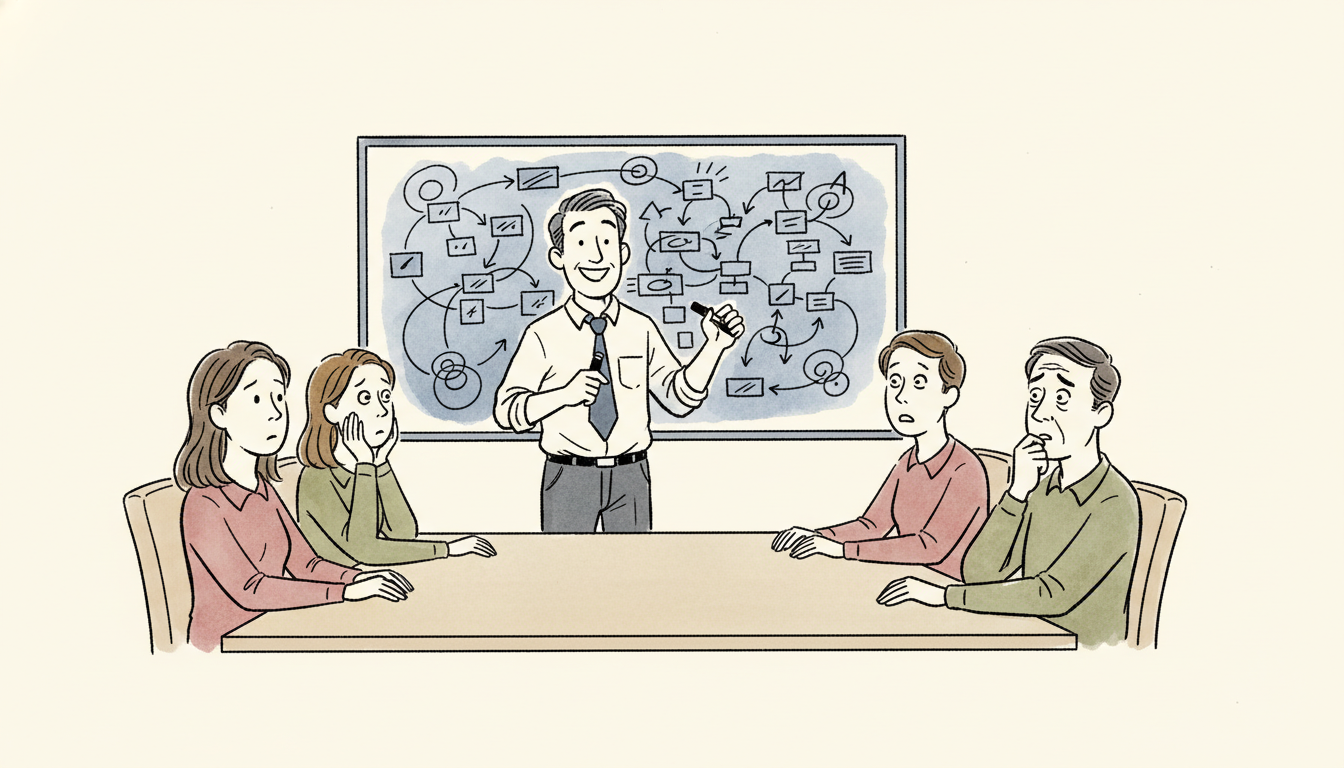
I can already hear the pushback, and it's legitimate. Most marketing teams are not in a position to deploy managed agent fleets. They're still figuring out how to use ChatGPT consistently across the team. They don't have API access. They don't have a developer. They don't have workflows documented clearly enough for a human to follow, let alone an AI agent.
That's real. And I don't think the answer is to panic about it.
Adobe's 2026 AI and Digital Trends report, surveying thousands of executives and customers, found that the primary bottleneck to agentic AI adoption isn't model capability. It's data fragmentation and uneven organisational readiness. The models are ready. The infrastructure is now available. The gap is internal: messy data, undocumented processes, unclear ownership.
But here's why I still think this matters right now, even if you're not deploying agents tomorrow. The infrastructure layer sets the ceiling for what becomes possible. When Anthropic makes agent orchestration a hosted service, it means the barrier drops for everyone, not just enterprise engineering teams. When Canva bundles agent management with marketing automation, it means the tools you're already using will start offering these capabilities natively. When HubSpot prices its AI agents at a dollar per qualified lead, it means you don't need to build the agent yourself to benefit from the economics.
The readiness gap is real. But the infrastructure is being built around you whether you're ready or not. The question is whether you're paying attention to where the handholds are appearing.

If you're running a marketing team or building a product, here's what I'd actually do differently based on this shift.
First, audit your workflows for delegation readiness. Not "which tasks could AI do?" but "which workflows are documented clearly enough that I could hand them to a competent stranger with written instructions?" If the answer is none, that's your first project. Agents need structured inputs. So do new hires. The work is the same.
Second, stop evaluating AI tools in isolation. The value is in the stack, not the individual tool. If you're inside Canva, pay close attention to how Simtheory and Ortto get integrated. If you're on HubSpot, look at how Breeze AI agents are being priced and what they can resolve. The platform you're already paying for is likely about to become significantly more capable.
Third, start small with agent workflows. You don't need Managed Agents and a fleet of coordinated AI systems. You need one repeatable process, clearly documented, handed to one agent, monitored for a week. Learn how it breaks. Learn what it needs. Then add a second. The teams that will move fastest in twelve months are the ones building that muscle memory now.
I've watched this pattern before. When I first started building marketing systems, the shift from manual processes to automation felt overwhelming until you actually built the first workflow. Then it felt obvious. This is the same shift, just at a different layer of the stack.
The infrastructure is here. The orchestration layer is a product you can buy. What you build on it is the only question that matters now.