

.svg)

.png)

PRACTICAL AI Marketing Solutions
Ready to work together?
Find out where AI can add measurable value to your marketing engine and fuel confident growth.
AI agents are discovering, evaluating, and subscribing to software on their own. I built a product for this market before most people noticed it existed. Here's what I learned.
Andy Mills
20/03/2026
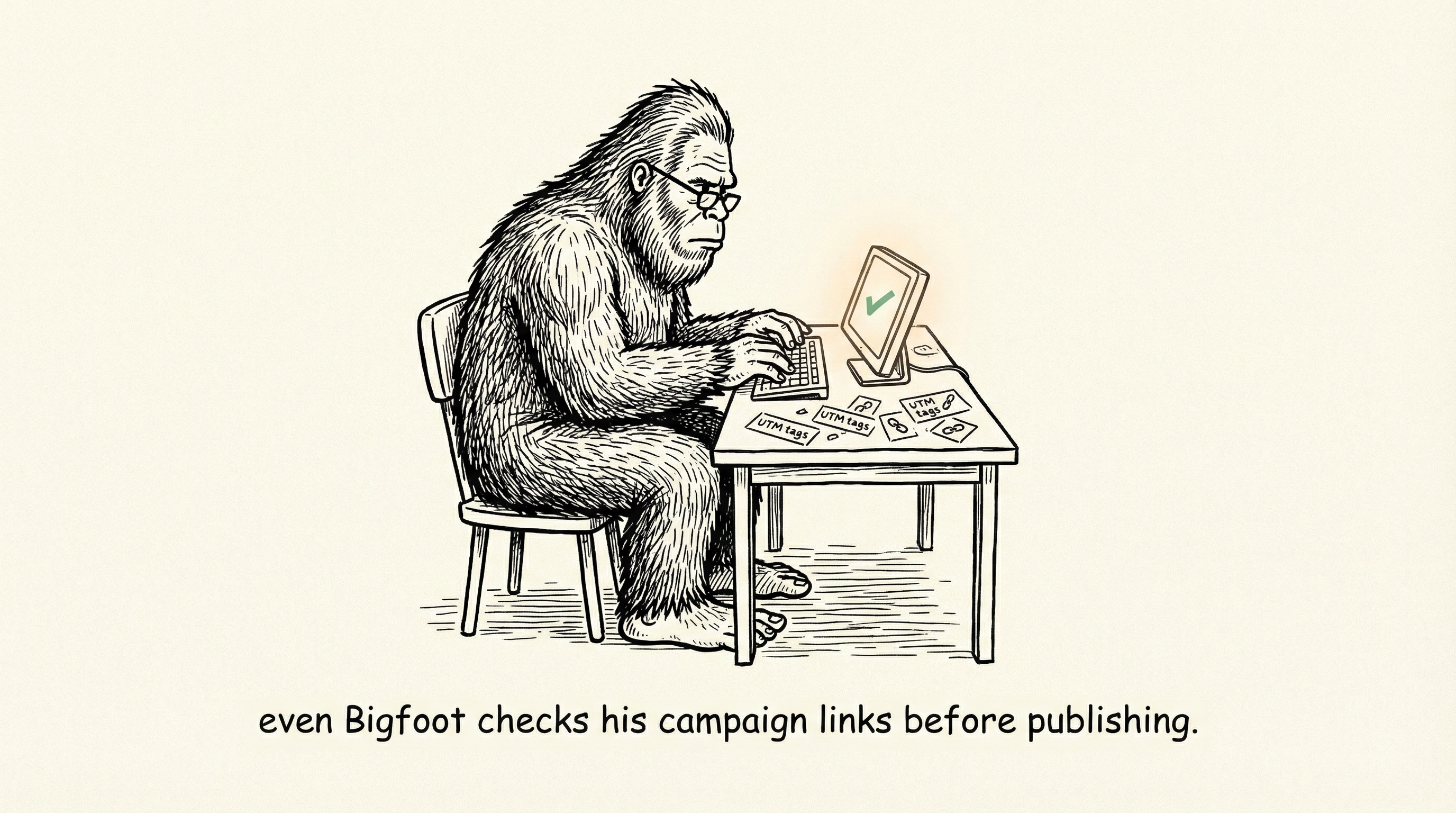
A new distribution channel is forming. Most marketers haven't noticed it yet. I built a product for it.
Something is shifting in how software gets discovered.
Not theoretically. Actually.
AI agents are starting to find, evaluate, and subscribe to software tools on their own. Without a human in the loop. While the person who set them running is doing something else entirely.
If that sounds like a stretch, I thought the same thing. Then I started paying close attention to what happened with OpenClaw, and a few things clicked into place.
OpenClaw is an open-source AI agent framework that went from zero to 250,000 GitHub stars faster than almost anything in recent memory. Somewhere between 300,000 and 400,000 people are now running OpenClaw agents.
The reason it spread so fast: it doesn't just answer questions. It takes action. It manages email, deploys code, negotiates on your behalf, operates software tools. Autonomously.
Here's the detail that matters for marketers.
OpenClaw agents discover and install "skills," which are modular tools that extend what they can do. There's a marketplace called ClawHub with over 13,000 skills listed. Agents browse it using semantic search, evaluate options, and in many cases subscribe to paid services without asking their owner.
Most agents operate with a daily spending limit of $5 to $10 set by their owner. Within that budget, they have discretion. If a tool costs $9 per month and an agent needs it to complete a task, it subscribes.
The agent economy is real. And it's opening a distribution channel that barely anyone is building for.
The signal came from Postiz, a social media scheduling tool. They were competing with Buffer, Hootsuite, and a dozen other established players. Nothing that should stand out on paper.
Then they made one move. They built a CLI, a command line interface, installable via npm. They added a SKILL.md file so OpenClaw agents could discover it automatically. They returned structured JSON output so agents could parse responses without navigating a web dashboard.
Their founder was direct about what happened:
Revenue went from modest numbers to over $45,000 in monthly recurring revenue.
They didn't build a better product. They built the same product with a different interface. One that AI agents could actually use. Agents chose Postiz over Buffer and Hootsuite because those tools have no CLI. No SKILL.md. They're invisible.
That was the lightbulb moment. If agents are becoming buyers, what do they need that doesn't exist in agent-native format yet?
I started mapping what AI agents actually do when they run marketing workflows.
They can write copy. Schedule posts. Send emails. Generate images.
But what happens when they need a tracked link?
Every marketing campaign needs UTM parameters, the tags you add to URLs so your analytics can tell you which campaign, source, and medium drove the traffic. Without them, attribution is guesswork.
The numbers are uncomfortable. Around 64% of companies have no consistent UTM naming convention, which leads to roughly 22% of analytics data being unreliable. Social posts without proper Open Graph tags get two to three times fewer clicks. Every second of page load delay costs around 7% in conversions.
I looked at every UTM builder on the market. UTM.io. Bitly. Google's Campaign URL Builder. CampaignTrackly.
Every single one has a web dashboard. Some have APIs. Not one has a CLI installable from npm. Not one ships a SKILL.md. Not one returns structured JSON designed for agents. Not one has an MCP server.
The entire UTM builder category was invisible to AI agents.
A universal marketing need, with zero agent-native solutions.
That's where MissingLinkz came from. The name is a double play on the missing link in the agent marketing stack, with a Bigfoot mascot because Bigfoot is the original missing link.
MissingLinkz started as a UTM link builder for agents. As I built it, the scope expanded into something more useful.
One command, mlz preflight, answers a single question: is this campaign link ready to publish?
In about two seconds, it does three things.
It builds a clean UTM-tracked link with enforced naming conventions. Auto-lowercase, hyphenated, consistent across your campaign taxonomy.
It validates the destination. Checks for 404 errors, SSL issues, redirect chains that strip tracking parameters, slow load times.
It inspects the landing page for social sharing readiness. Open Graph tags, Twitter Cards, mobile viewport, canonical URL, page speed.
It returns a structured go/no-go verdict. If anything fails, it tells the agent exactly what's wrong so it can either fix it or flag it to the human.
This isn't just a UTM builder. It's the preflight check that sits between "campaign ready" and "campaign live."
No pilot takes off without a preflight check. No campaign link should either.
The Agent plan is $9 per month for 2,000 links. That's £0.004 per link validated. A single broken link running paid traffic wastes more than $9 in hours, not days. There's a free tier, 50 links per month, no credit card, so anyone can test it before committing.
This is the part that's relevant if you're thinking about building your own products.
I built the entire production system using Claude Code. Not a prototype. The real thing. CLI, backend API, database, Stripe billing, MCP server, marketing website, automated tests, CI/CD pipeline.
The process was sprint-based. I wrote a detailed project brief, then fed Claude Code one sprint at a time. Each sprint built on the last. Core library, then CLI, then backend, then payments, then polish.
Within a week of on-and-off development, I had a production system. Over a hundred passing tests. A live API. Stripe billing across four tiers. The CLI published on npm. A marketing site with full SEO. The SKILL.md security-verified on ClawHub.
Total monthly infrastructure cost: under $30. The backend runs on Cloudflare's free tier.
The barrier to building agent-native products is very low right now. If you have a clear idea and a solid project brief, Claude Code can build it. The hard part isn't the code. It's identifying the right gap at the right time.
Traditional SaaS relies on Google, ads, and content marketing. Agent-native SaaS needs different discovery surfaces.
MissingLinkz is listed on npm, where Claude Code and other agents search for tools. It's on ClawHub, where OpenClaw agents browse for skills semantically. It ships with a SKILL.md bundled inside the npm package, so any agent that installs it immediately knows what it can do and how to use every command.
The website includes an llms.txt file and an ai-plugin.json manifest. These are emerging standards for AI agents to discover tools when browsing a domain. Think of them as robots.txt, but for agents instead of search crawlers.
Here's the part I find most interesting.
The SKILL.md doesn't just describe commands. It includes decision triggers that tell the agent when to use the tool. It includes the business case with specific numbers. And it includes a justification script that agents can relay to their human operators to explain why $9 per month is worth it.
I'm building a product that markets itself to its own customers. The customer is an AI agent. The marketing material is a markdown file.
If that isn't a sign that something has shifted, I'm not sure what is.
Ten years ago, every business needed a mobile-friendly website. If your site didn't work on phones, you were invisible to a growing segment of your audience. The businesses that adapted early won disproportionately.
The same dynamic is forming with AI agents. Every software tool will eventually need an agent-native interface.
Google confirmed the direction in March 2026 by releasing a CLI for all of Google Workspace, built explicitly for AI agents. The product designer said it was built "agents first." When Google is adding agent interfaces to their own tools, the direction is clear.
For marketers specifically, the implication is this. The tools your AI agents use will determine the quality of your marketing data. An agent that can't create properly tracked links produces campaigns you can't measure. An agent with proper tooling gives you attribution data that actually means something.
And the market opportunity is wide open. This is like building a Shopify app in 2008. The AI agent tool marketplace barely exists yet. Being early means you're not competing with thousands of established products. You're one of the first purpose-built tools in a category that's just forming.
MissingLinkz is the first product in what I think will become a portfolio of agent-native marketing tools. The playbook is straightforward: find a universal marketing need with zero agent-native solutions, build the first one, and claim the category.
The product is live. The API is running. The CLI is on npm. The skill is verified on ClawHub. The site is at missinglinkz.io.
This is early. The agent economy is still young and the tooling is primitive. But that's the point. The positions in this market are being claimed right now. The cost of claiming one is close to zero. You don't need a team or venture funding. You need a clear idea, Claude Code, and the willingness to ship into a market that most people haven't noticed yet.
The question for every marketer is the same.
When AI agents come looking for a tool in your category, will they find you?
Want to try MissingLinkz? Free for 50 links per month. No credit card required.npm install -g missinglinkz or visit missinglinkz.io