

.svg)


PRACTICAL AI Marketing Solutions
Ready to work together?
Find out where AI can add measurable value to your marketing engine and fuel confident growth.
The SaaS model as we know it is under pressure, and most marketing teams haven't noticed yet. This article explores why AI agents are making traditional software interfaces irrelevant, not by destroying the platforms, but by shifting the value from the experience layer to the data layer underneath. It examines the knowledge gap holding adoption back, weighs the counter-argument that enterprise software will consolidate rather than collapse, and lands on a practical framework for marketers ready to stop managing software and start managing agents.
Andy Mills
27/02/2026
.png)
Why your favourite marketing tools are about to become invisible infrastructure
There is a comfortable lie circulating in marketing departments right now.
It goes something like this: AI is a helpful add-on. It will make our existing software slightly more efficient. We keep our familiar interfaces, Salesforce, HubSpot, ServiceNow, but now there's a shiny new button that summarises data for us.
That's a total misunderstanding of the trajectory.
Most marketers are bringing a knife to a drone fight.
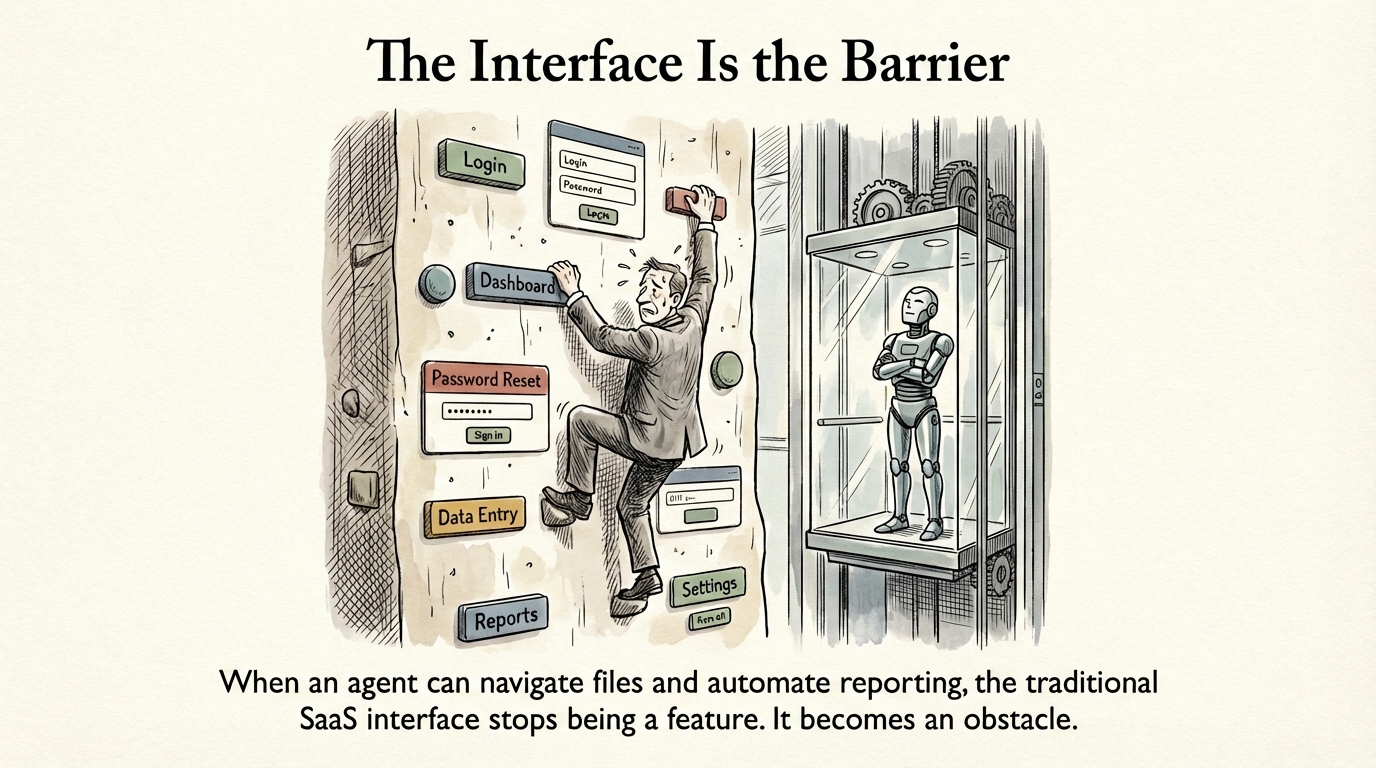
Look at what just happened with Claude Cowork. Anthropic open-sourced 11 specialised plugins targeting legal, sales, marketing, finance, and data analysis. The exact territories that enterprise SaaS vendors have charged a premium to gatekeep for decades.
When an agent can navigate your local files, pull data from your browser, and automate your reporting, the traditional SaaS interface stops being a feature. It becomes a barrier.
This is the bit most teams miss.
We're not watching AI get bolted onto existing software. We're watching existing software become unnecessary middleware.
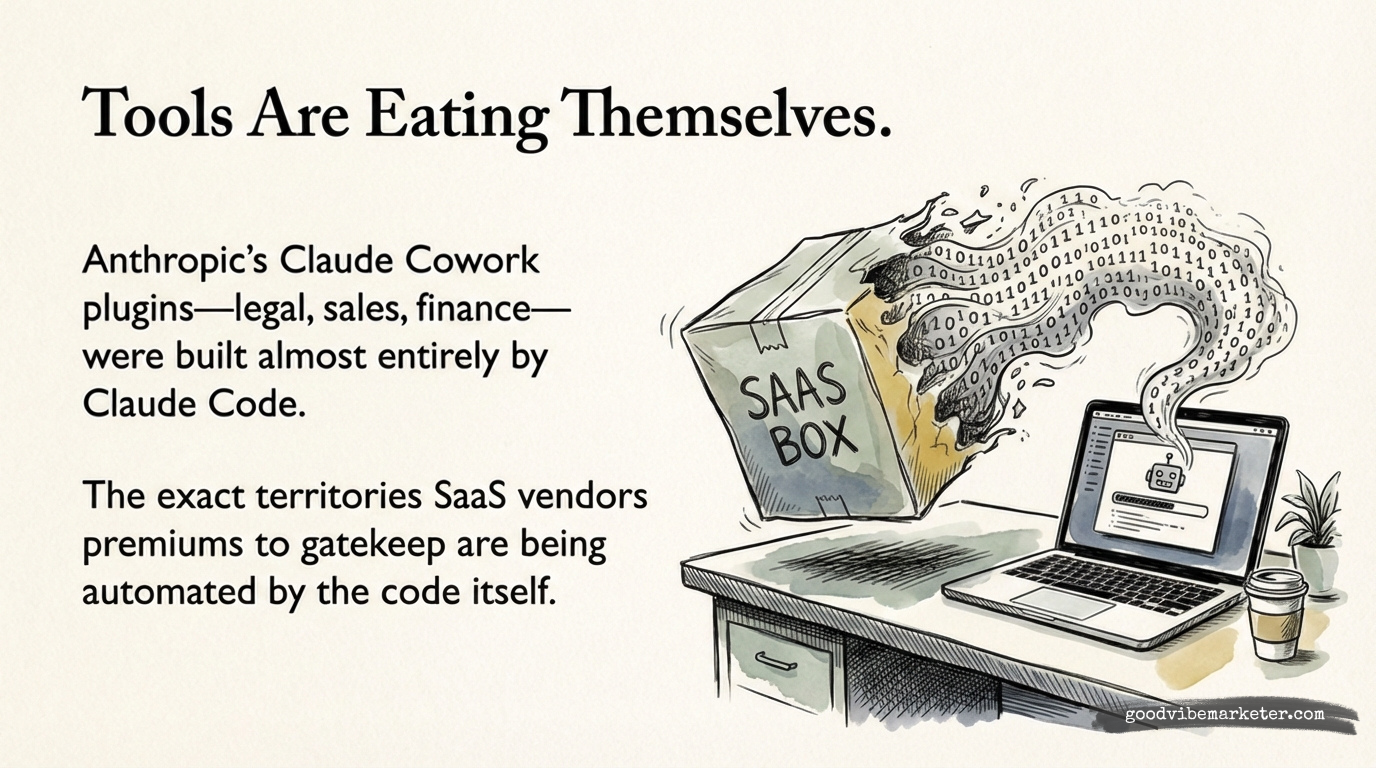
Claude Cowork wasn't just built by a team of humans. It was built almost entirely using Claude Code. The tools are eating themselves. When an agent can turn a folder of screenshots into a formatted spreadsheet, or draft a Q1 product update by reading scattered meeting notes, the need for a specialised reporting tool starts to evaporate.
We're moving from "AI-powered tools" to "AI-generated workflows."
In this new world, the value isn't in the software subscription. It's in the agent's ability to execute across all your data simultaneously.
.png)
If this shift is so obvious, why is adoption lagging?
The data tells the story clearly. 98% of mid-market marketers believe AI will improve their metrics, yet only 35% have fully embedded it into daily operations. The hurdle isn't the technology. It's the 39% who cite a lack of knowledge or skills.
This is why 87% of CMOs are currently facing performance issues. They're trying to scale with legacy processes while competitors are building agentic workflows around them.
Many firms are choosing to "wait and see." Treating AI like a luxury they'll get to eventually.
This is a strategic error.
Only 29% of mid-market firms have specialised AI staff. That's not a problem. It's a competitive opening for those who move now. AI isn't a tool you learn like a new version of Photoshop. It's a fundamental shift in how work is organised.
Chugging along is a death sentence in a market where top performers are already delegating the heavy lifting to agents.
Here's where it gets practical.
Very soon, you won't log into a CRM to update a lead. You'll tell your agent to update the pipeline based on your last three Slack conversations, and it will happen in the background.
We're already seeing this in the browser wars. Perplexity's Comet and Google's CC agent are designed to reduce cognitive overload. They don't want you to browse. They want to give you the answer.
This ambient intelligence means the search-and-click behaviour that defined the last twenty years is dying. If your marketing strategy relies on people clicking through a series of pages to find information, you're designing for a world that no longer exists.
Now, the honest take.
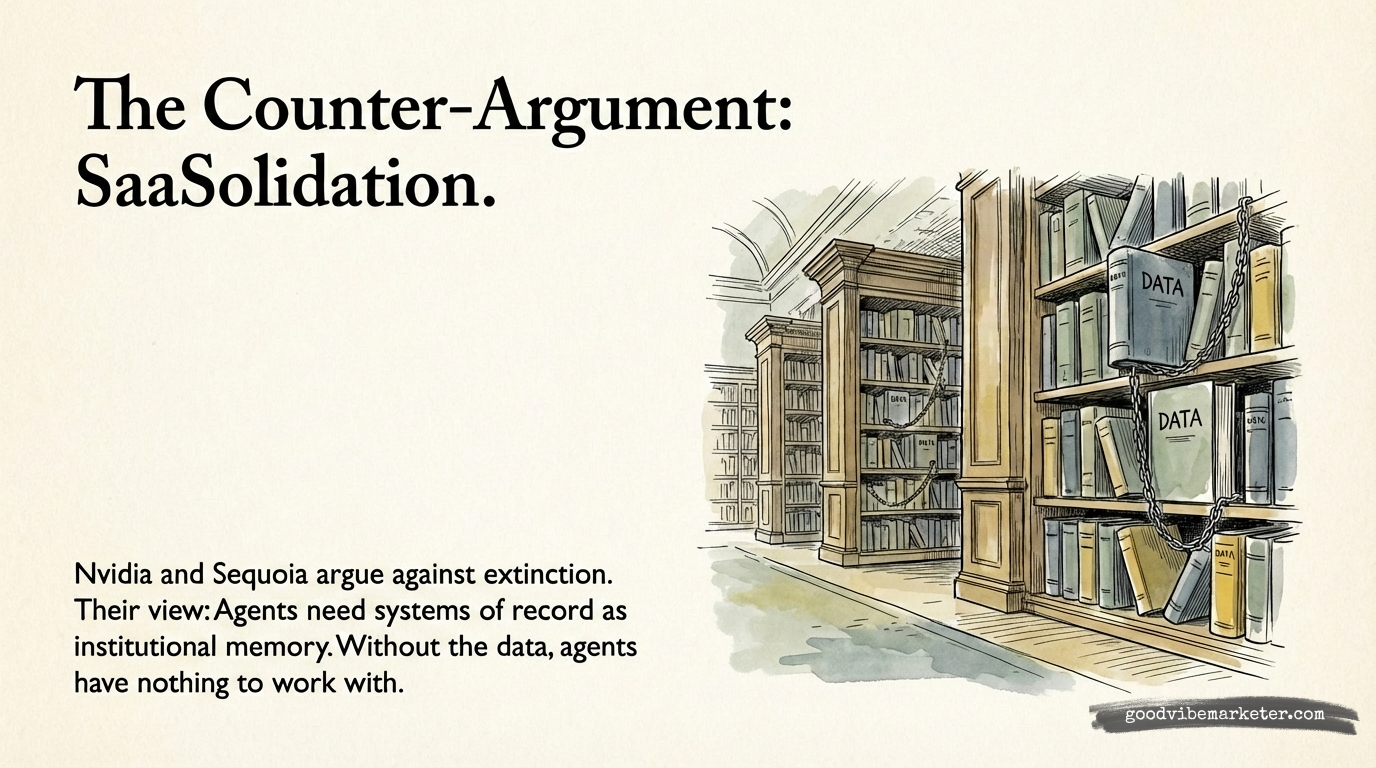
Some serious people disagree with the extinction narrative. Nvidia CEO Jensen Huang and partners at Sequoia Capital argue the story is overblown. Their view: enterprise software acts as the system of record and institutional memory that AI agents actually need to function. Without Salesforce holding your customer data, without HubSpot managing your contact history, the agents have nothing meaningful to work with.
They predict consolidation, not extinction.
I think they're right. In the short to medium term, at least.
Over the next three to five years, we'll likely see a period of SaaSolidation rather than a SaaSpocalypse. The platforms that hold structured, trusted data will become more valuable, not less, because agents need reliable context to operate effectively. The CRM doesn't disappear. It becomes the foundation layer that agents build on.
But here's the tension.
The platforms that survive won't be the ones with the best interfaces. They'll be the ones with the best data structures, the cleanest APIs, and the most agent-friendly architecture. The value shifts from the experience layer to the infrastructure layer.
The interface becomes invisible. The data becomes essential.
So the question for marketers isn't whether your tools will disappear overnight. They won't. The question is whether the tools you're paying for are positioning themselves as agent-ready infrastructure, or clinging to an interface-first model that's rapidly losing its purpose.
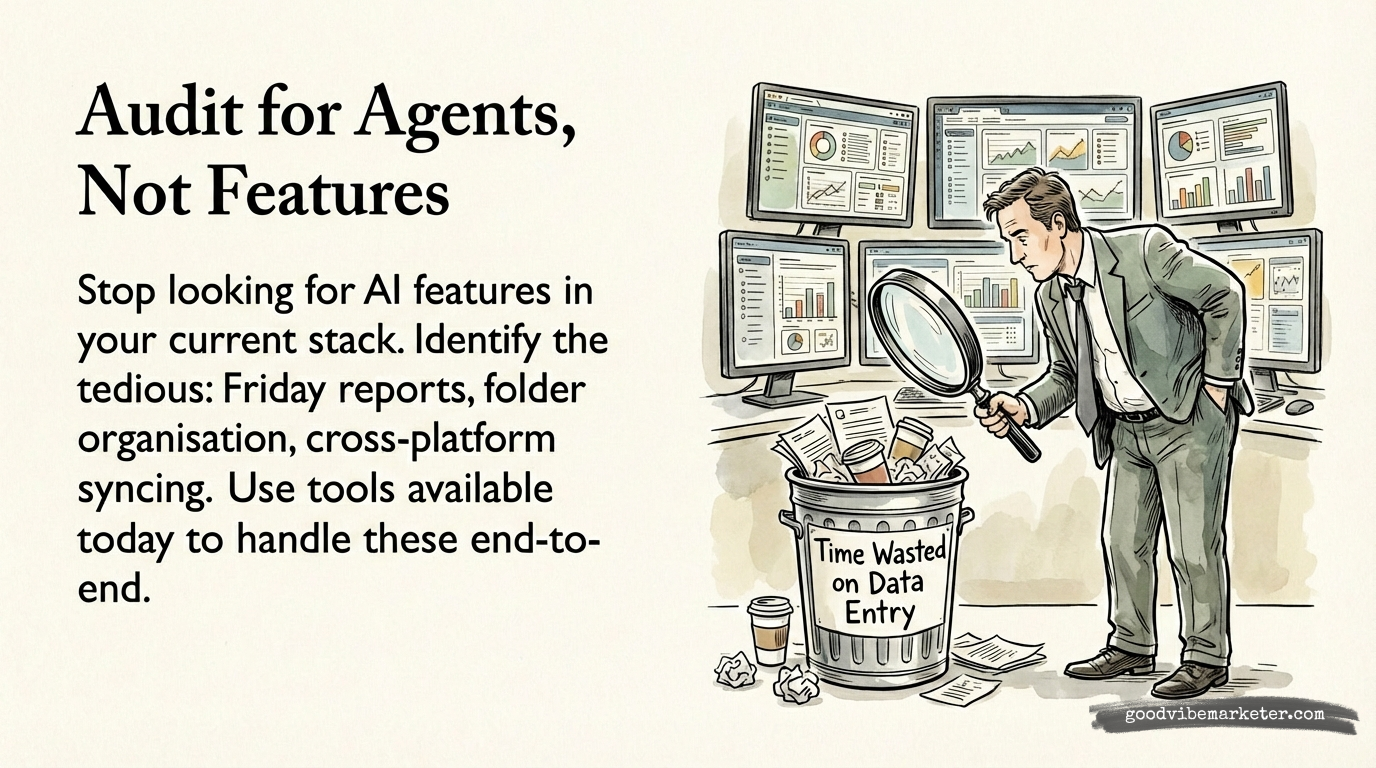
Stop looking for "AI features" in your current tool stack.
Instead, audit your department for agentic potential. Identify the three most tedious, recurring tasks your team performs. The Friday reports that take four hours. The folder organisation. The cross-platform data syncing.
Don't wait for your SaaS provider to release a magic update. Use the tools available today to see if an agent can handle these tasks end-to-end.
Your goal is to move from managing software to managing agents.
The competitive advantage goes to those who stop browsing their work and start delegating it.
The SaaSpocalypse might be more of a slow consolidation than a sudden collapse. But the direction of travel is clear.
The teams that reorganise around agents, not just adopt them, will set the pace.
Everyone else will be optimising interfaces that nobody logs into any more.